Published 2026-08-03 · Updated 2026-09-11 · By Arclumin Team
Your bar type, viewing distance and lighting decide the right LED display. This guide shows how to match pixel pitch, refresh rate and components to your venue.
A guide to easily understand size, pixel pitch, refresh rate, and installation methods.
Choosing the right LED display for a bar requires more than picking the biggest screen. Bars, nightclubs and live houses each have different lighting, viewing distances and usage patterns, so the ideal configuration varies by venue. Therefore this guide walks you through bar types, pixel pitch, refresh rate and the internal components that determine real display quality.
Understand Your Bar Type and Usage Scenario
Before purchasing, you need to clarify your usage scenario. In fact,different bar types place very different demands on an LED screen.
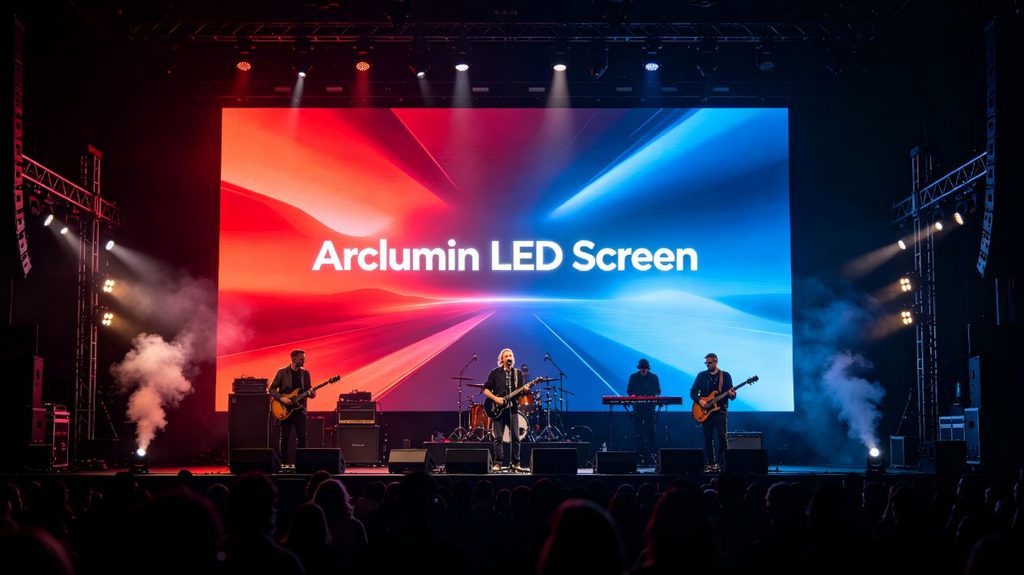
1. Live House: There are many live performances and band performances, and operators mainly use the LED screen as a stage background. Consequently,the screen needs to handle fast-moving visuals and bright stage lighting.
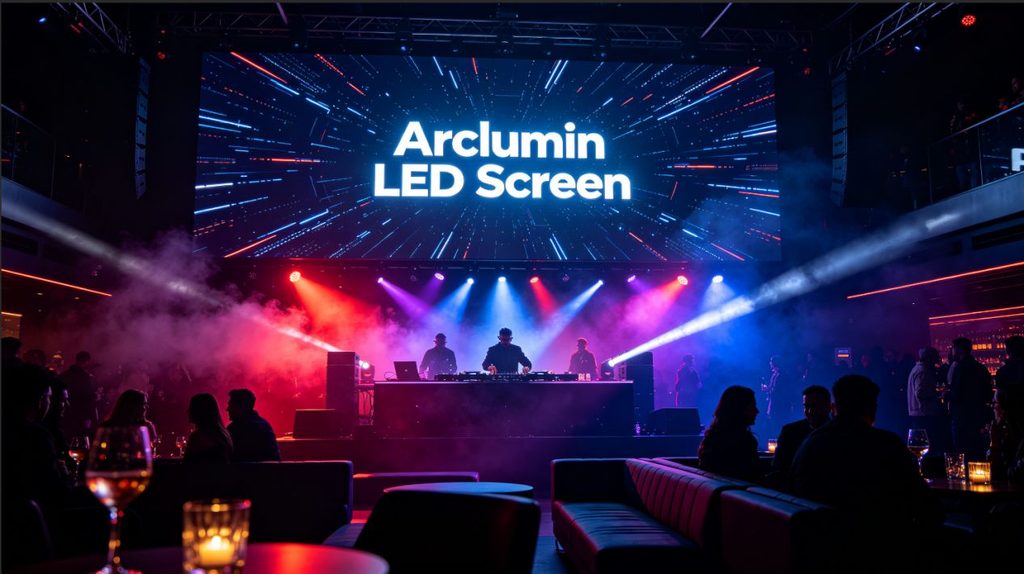
2. Nightclub: Nightclubs are mainly for dancing, socializing, drinking and leisure activities, and are usually decorated with dynamic lighting. The screen must maintain clear images even under rapidly changing coloured lights.
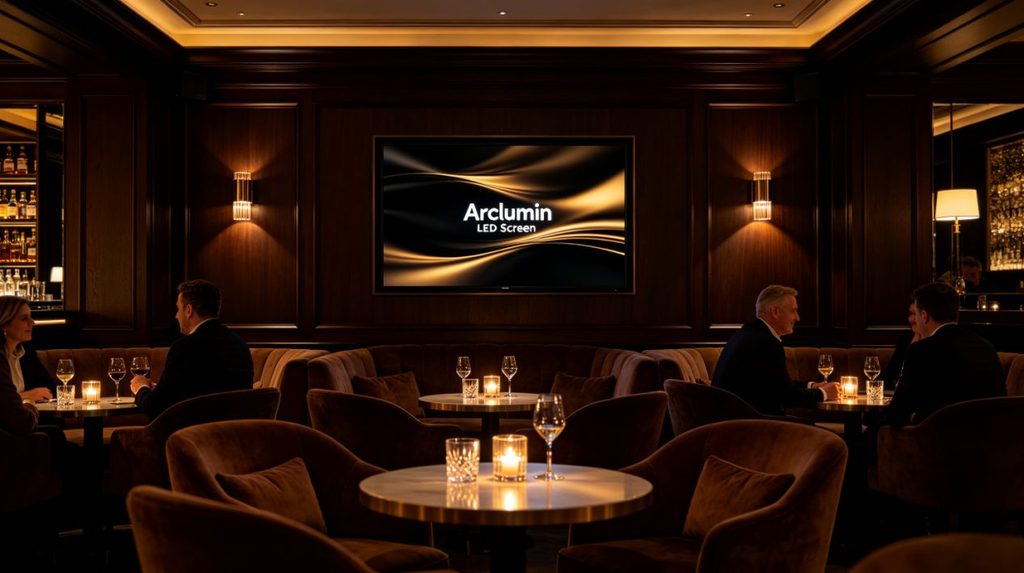
3. Lounge bar: Primarily for quiet drinking, chatting and relaxation, with a soothing atmosphere. Meanwhile,the screen here often serves as ambient decor or displays subtle branding content.
Choose the Right Pixel Pitch (P-value)
Pixel pitch determines the distance between pixels in an LED display screen. The smaller the number, the finer the image, but the price will also increase significantly.
For example, in the bar lobby, guests are at least 5 meters away from the screen, and most stand at a distance of 4 meters to view it. Paired with a P2.5 screen, the image quality is delicate and grain-free under lighting conditions, providing a perfect viewing experience.
Conversely, using a P1.25 screen increases costs by 60 percent, and customers at a distance of 4 meters will not perceive any improvement in image quality, making the extra investment completely wasted. Therefore, a smaller pixel pitch is not always better. The choice must be made based on the specific circumstances.
Viewing distance
Recommended P-value
2-3 m
P2.0
3-5 m
P2.5
5-8 m
P3.0
8 m and beyond
P4.0
Our indoor fixed LED displays, such as the SG Steady Glow series, offer pixel pitches ranging from P1.25 to P4, covering the full range of bar viewing distances from close-up lounge areas to large nightclub main walls.
Refresh Rate: Why It Matters in Bars
Refresh rate refers to the number of times an LED screen refreshes its image per second, measured in Hz. A 1920Hz screen refreshes 1920 times per second, while a 3840Hz screen refreshes 3840 times per second. The higher the refresh rate, the smoother the scene transitions.
In bars with frequently flashing lights, ordinary low refresh rate screens (1920Hz and below) will produce black scrolling stripes when you take a picture of the screen, resulting in slightly poor photo quality. A 3840Hz high refresh rate screen, however, ensures that no matter how flashing the lights are, the picture quality will be excellent when taken with a mobile phone. For bars and nightclubs where customers frequently photograph the venue, a 3840Hz refresh rate is strongly recommended.
Inside the LED Module: Key Components That Determine Quality
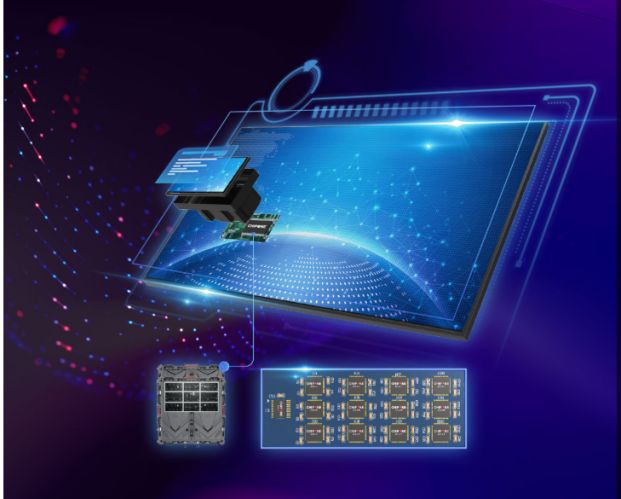
Many customers, when choosing LED displays, often only focus on pixel pitch and refresh rate, neglecting the core components that truly determine screen quality. An LED display mainly consists of a PCB board, LED chips, driver ICs and a module housing. These core elements collectively influence the screen display performance.
PCB board: It is responsible for connecting all electronic components and transmitting circuit signals, and is the basic carrier for stable operation of the screen.
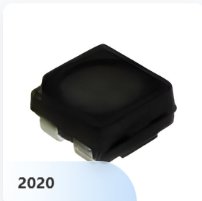
LED beads: These are the light-emitting pixels of an LED display screen, directly determining image quality, colour, brightness and screen lifespan.
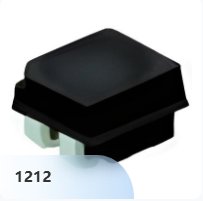
NOTIONSTAR 1212 LED chip (approximately 1.2 mm x 1.2 mm, compatible with P1.53 models):
– High brightness and low power consumption: high luminous efficiency, balancing brightness and energy saving.
– High reliability, high contrast: compatible with P2.5 models.
– Wide viewing angle: maintains a clear and natural display effect even from multiple angles.
Driver IC: The core control component, responsible for controlling the display colour and refresh rate of the LED beads. The smaller the pixel pitch of the screen, the more driver ICs are required.
ICND2152 LED display PWM driver chip (suitable for indoor LED display applications):
– 16-channel constant current output: supports 16 independent constant current drives, ensuring stable output.
– Common anode drive architecture: adapted to common anode LED display designs, helps reduce overall screen power consumption.
– Supports 1 to 16 scans: compatible with multiple scanning methods for different pixel pitches.
– 3840Hz/7680Hz high refresh rate: effectively reduces screen flicker.
– SSOP24 package: mature and stable, facilitating PCB design and mass production.
Bottom shell: It encapsulates and protects the module circuit, serving to prevent dust and moisture, and to reinforce the structure.
Key Takeaways for Your Purchase
A suitable LED display screen requires comprehensive consideration of the bar type, viewing distance, pixel pitch, refresh rate and module configuration, rather than simply pursuing higher parameters or lower prices. The display quality depends not only on the overall specifications but also on the LED chips, driver ICs, PCB board and module structure.
Therefore, when choosing an LED display screen, it is recommended to consider the actual installation environment and usage requirements, and select a suitable configuration rather than blindly pursuing the highest specifications.
Need help selecting the perfect LED display for your bar or nightclub? Tell us your venue type, viewing distance and lighting conditions, and our team will recommend the ideal pixel pitch and refresh rate for your space. Contact us today to get started.
For project inquiries, please contact your dedicated Arclumin Sales Consultant. Our team operates across time zones to support projects in Europe, North America, Africa, Australia, and markets worldwide.
WhatsApp +86 136 8235 1211 · 7×24 — we reply within 24 hours.

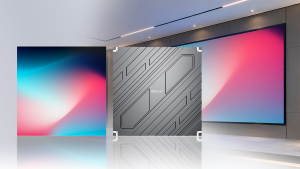 SG Steady GlowIndoor Fixed LEDP1.25 – P4
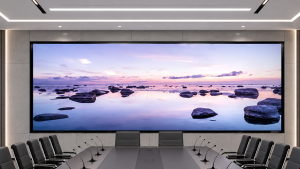 PL Pure LightIndoor Fixed LEDP1.25 – P1.86COB Fine Pitch LED→
 OG Obsidian GlowCOB Fine Pitch LEDP0.7 – P1.86View all product series →Not sure which series fits your project? Get a Recommendation →