What Are RoHS and CE Certifications for LED Displays?
Published 2026-10-29 · By Arclumin Team
RoHS and CE address different parts of LED display compliance. Learn how to read actual Arclumin certificates and match the paperwork to the equipment you order.
What Buyers Actually Need to Know
When you compare LED displays, you will often see RoHS and CE on a product page or quotation. What do they actually mean for your purchase? The short answer is that RoHS deals with restricted substances in the equipment, while CE marking relates to the EU product requirements that apply to it.
You do not need to memorise certificate numbers or testing standards to understand the basics. What matters is knowing what each document tells you and whether it relates to the display you plan to buy. Let us start with the difference, then look at the few checks that are useful before placing an order.
What RoHS Means for an LED Display
RoHS stands for Restriction of Hazardous Substances. It limits certain substances in electrical and electronic equipment covered by the rules. In an LED display, that can involve materials used in circuit boards, solder, cables, and plastic parts, rather than just the LEDs you see on the front.
This is about meeting defined substance limits, with any applicable exemptions taken into account. It does not mean that every restricted substance must be completely absent. It also does not tell you how sharp the picture looks or how long the display will last; those are separate things to check when choosing a screen.
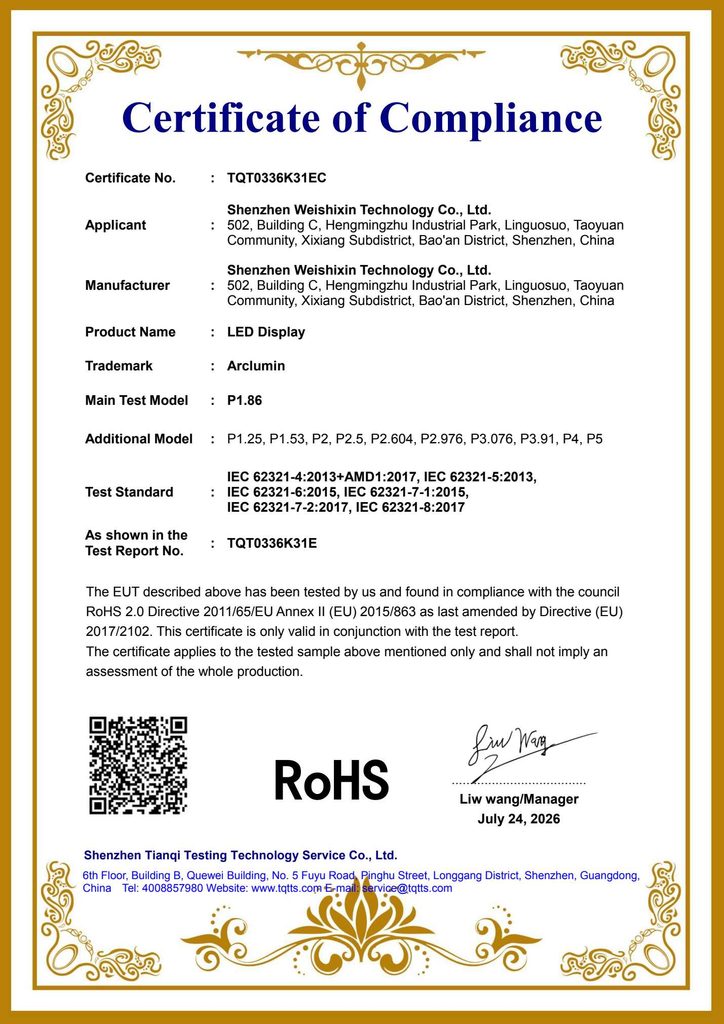
Below is Arclumin’s RoHS certificate for reference.
Arclumin RoHS certificate.
What CE Marking Means
CE marking means the manufacturer declares that the product meets the applicable EU requirements. Before using the mark, the manufacturer needs to assess conformity, prepare the technical documents, and issue an EU declaration of conformity. It is not an award from the European Union or a score for picture quality.
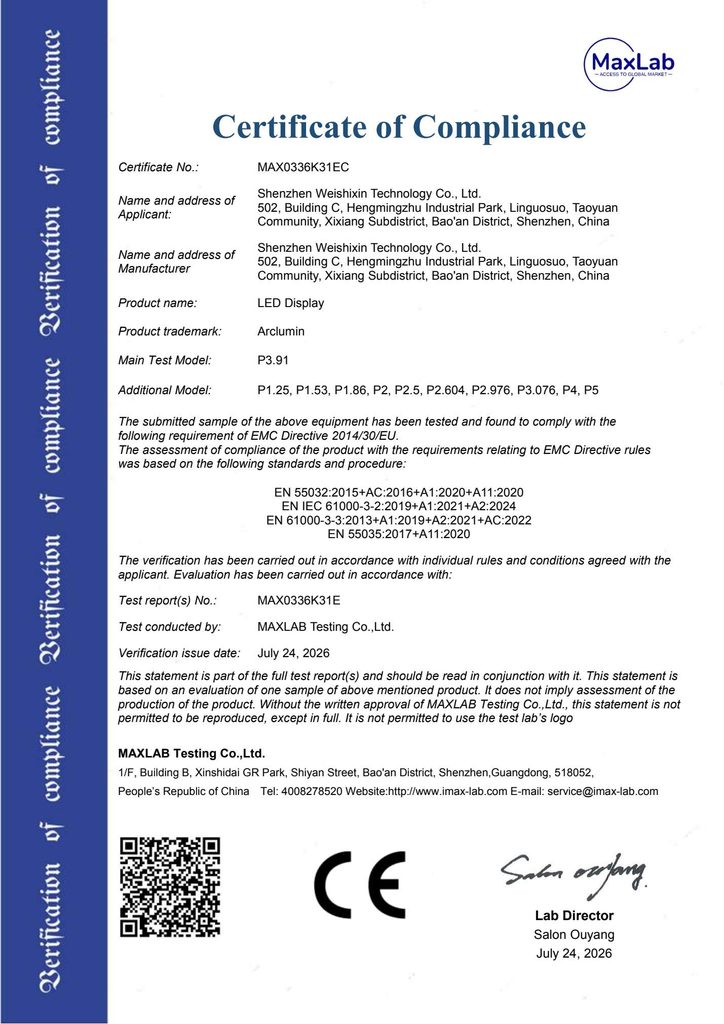
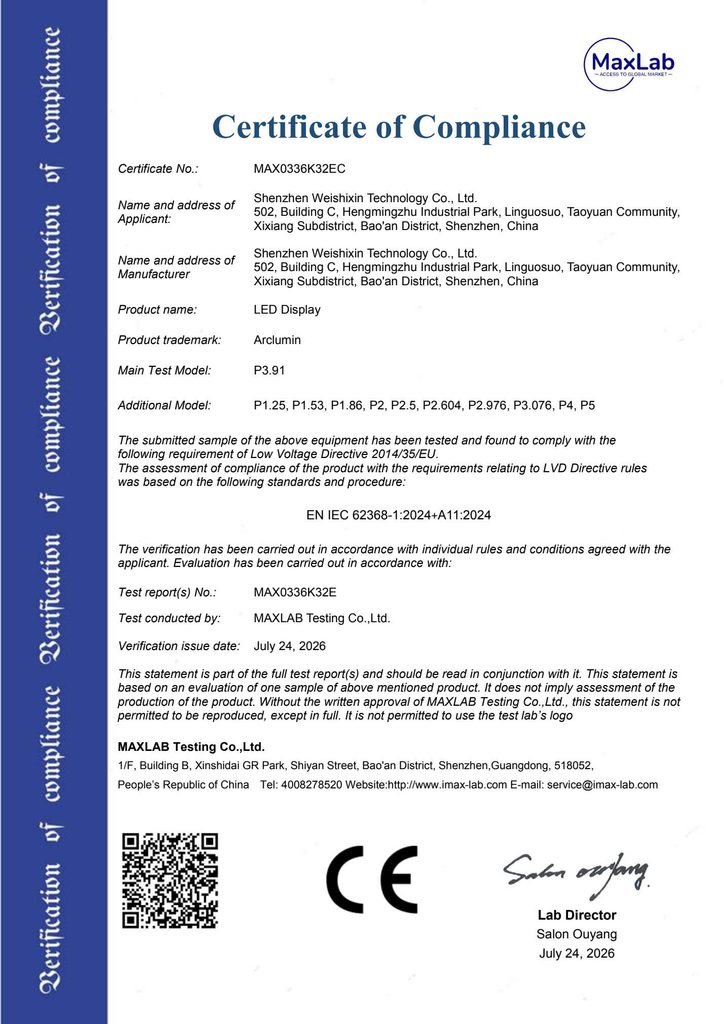
For LED displays, electrical safety and electromagnetic compatibility are common areas to check. In plain language, this includes electrical risks and how the equipment handles electromagnetic interference. The exact requirements depend on the equipment, so the screen and any separately supplied electronics need to be considered in their actual configuration.
You may receive laboratory certificates and test reports as part of the paperwork. They provide supporting evidence, but they do not replace the manufacturer’s declaration. RoHS is also part of the CE conformity requirements where it applies, so it is better to look at the document set together than treat the two logos as unrelated approvals.
Arclumin CE-EMC certificate.
Arclumin CE-LVD certificate.
What Should You Ask Before Buying
Start with a straightforward question: do these documents cover the equipment in my quotation? Give the supplier your destination market and the exact display model you are considering. If the document uses a different model name, ask the supplier to explain the connection rather than assuming a similar name means the same equipment.
For an indoor fixed screen, you can start with SG Steady Glow; for rental use, look at TL Traveling Light. Once you have chosen a model, ask for the relevant compliance documents for that configuration. A series name helps identify the product family, but the final check should follow the equipment you will actually receive.
What RoHS and CE Do Not Tell You
RoHS and CE do not choose the right screen for your room or event. You still need to consider viewing distance, content, the installation environment, and how the display will be maintained. Discuss these needs separately, rather than expecting a compliance mark to answer questions about brightness, appearance, or day-to-day use.
For a corporate or control-room installation, the mounting structure, electrical installation, and local site requirements also need their own review. Product documents do not approve the building work. Agree on both the equipment paperwork and the installation checks before handover, so everyone knows what is included and who will provide it.
For project inquiries, please contact your dedicated Arclumin Sales Consultant. Our team operates across time zones to support projects in Europe, North America, Africa, Australia, and markets worldwide.
WhatsApp +86 136 8235 1211 · 7×24 — we reply within 24 hours.

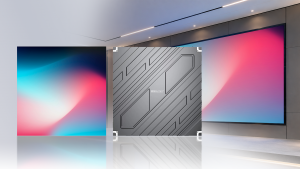 SG Steady GlowIndoor Fixed LEDP1.25 – P4
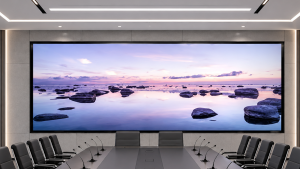 PL Pure LightIndoor Fixed LEDP1.25 – P1.86COB Fine Pitch LED→
 OG Obsidian GlowCOB Fine Pitch LEDP0.7 – P1.86View all product series →Not sure which series fits your project? Get a Recommendation →