Published 2026-08-21 · Updated 2026-09-22 · By Arclumin Team
GOB and COB use different approaches to LED module construction and protection. Compare them through viewing distance, content, handling risks, and maintenance needs.
GOB and COB describe different approaches to building and protecting an LED display module. They are useful terms when comparing products, but neither label tells you everything about picture quality, durability, or cost. The better choice depends on viewing distance, content, physical access, and the maintenance plan for the installation.
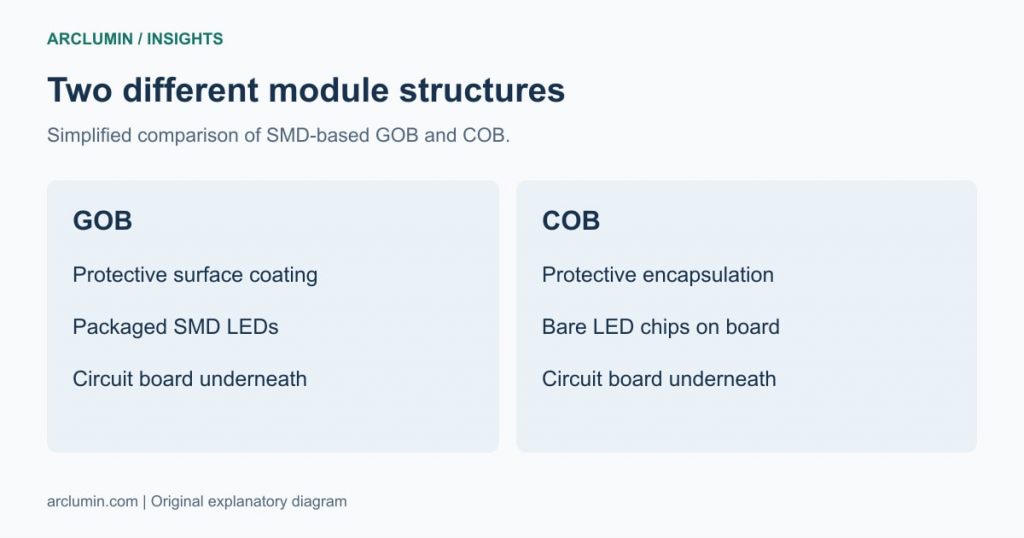
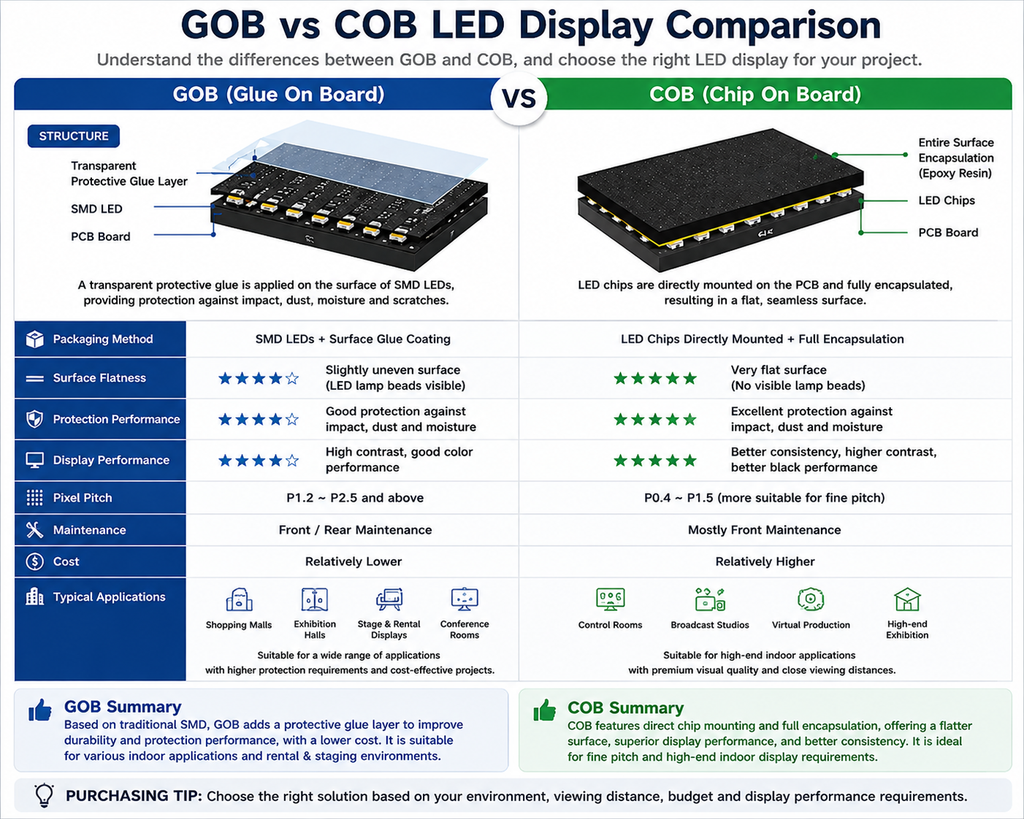
In a typical comparison, GOB adds a protective coating over a module that uses packaged LEDs, while COB places bare LED chips directly on the board before encapsulation. Understanding that structural difference helps buyers ask more useful questions. This guide connects the terminology to practical display selection without treating either technology as an automatic winner.
Start with the Structure of the LED Module
In a conventional SMD LED module, the light-emitting chips are contained within packages that are mounted on the circuit board. The packages form the visible pixel structure. Cabinet construction, electronics, and calibration then help determine how the assembled screen performs.
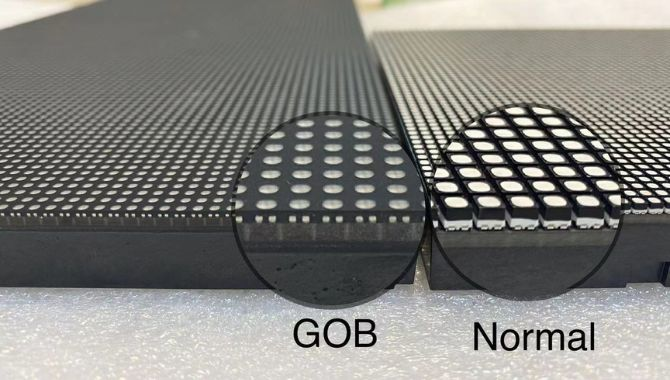
GOB, commonly expanded as Glue on Board, adds a protective material over the module surface. In the SMD-based approach discussed here, the packaged LEDs remain beneath that coating. The quality and uniformity of the material and the application process are important to the finished surface.
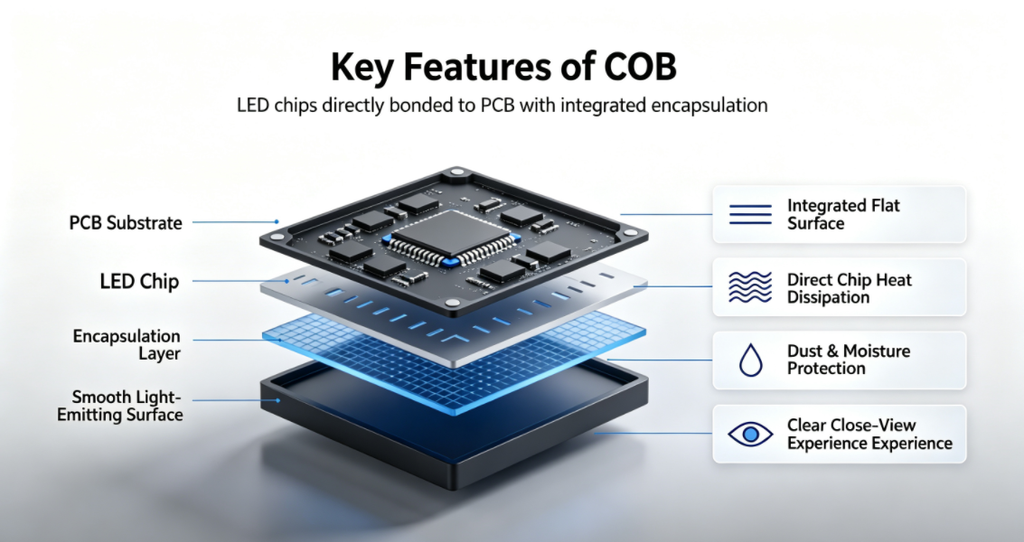
COB means Chip on Board. Bare LED chips are mounted directly on the board and protected by encapsulation, rather than first becoming separate conventional SMD packages. Both designs can have a protected surface, so the difference cannot be judged simply by whether the screen feels smooth.
Where GOB Protection Can Be Useful
A coated module can help reduce direct contact with exposed LED packages during handling or in accessible installations. That can be relevant around counters, exhibition features, and equipment that is moved regularly. The protection should still be assessed against the actual knocks, abrasion, and cleaning conditions expected on site.
GOB does not make a display indestructible. Edges, connectors, cabinet locks, and the supporting structure remain separate parts of the system. Transport cases, trained handling, and a suitable installation method are still needed even when the module surface is protected.
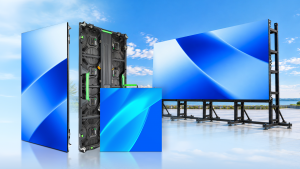
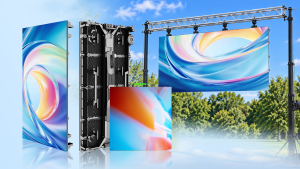
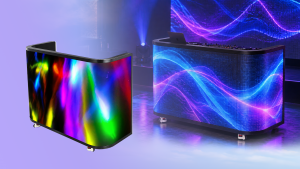
For a creative application using flexible modules with GOB, see the DB Drop Beam DJ booth LED series. Confirm the proposed module and cabinet specification for the project rather than assuming that every coated display is suitable for the same environment. Surface protection alone does not establish an outdoor rating.
Why COB Is Considered for Fine Pitch Displays
COB is used in fine-pitch displays where closely spaced pixels and an integrated surface are useful design characteristics. For close viewing, however, pixel pitch remains a direct part of the resolution decision. The packaging name alone cannot guarantee that individual pixels disappear at every viewing distance.
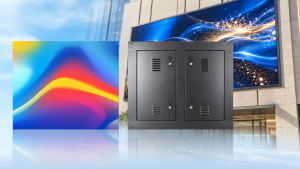
Explore the OG Obsidian Glow COB fine-pitch LED series when evaluating a detailed indoor image. Assess a sample with the content that the screen will actually show. Small text, gray backgrounds, gradients, and dark scenes reveal different aspects of performance.
Also examine the screen under the room’s normal lighting. Reflections, surface finish, calibration, and brightness settings influence the experience. Claims about glare, heat, or contrast should be supported by the specific product specification and demonstration, rather than attributed to all COB products as a group.
Compare Displays at the Same Viewing Conditions
A fair comparison starts with similar pixel pitch, screen resolution, brightness, and content. Comparing a finer-pitch COB screen with a much coarser GOB screen can confuse the benefit of resolution with the benefit of packaging. Record the differences before deciding which product offers better value.
For meeting rooms and workspaces, use actual presentation slides and spreadsheets during the demonstration. Check legibility from the nearest and farthest normal seats. Arclumin’s Corporate & Control Rooms LED solutions can help frame these requirements around the room and its users.
For public-facing displays, consider how people approach the surface and where equipment or furniture may touch it. A display behind a protective architectural boundary has different exposure from a screen built into a reachable counter. The module choice should respond to that difference.
Discuss Maintenance Before Choosing a Technology
Do not assume that every GOB module is easy to repair or that every COB fault requires discarding the whole module. Repair procedures depend on the construction, available equipment, and the supplier’s service capability. Coatings and encapsulation can affect the work needed to reach damaged components.
Ask what the site team can replace, what must be returned for specialist work, and how spare modules will be matched to the installed screen. Clarify access tools, replacement time, and any recalibration procedure. A clear service plan is more useful than a broad claim that one technology never fails.
Also confirm the approved cleaning method and any restrictions on touching the surface. A protective finish is not evidence that abrasive cleaners or uncontrolled water exposure are acceptable. The cabinet’s environmental rating and maintenance instructions remain relevant for both approaches.
Compare the Complete Project Cost
Price per square meter is only part of the decision. Compare the same display size, pitch, control system, mounting arrangement, spares, and service coverage. Include the cost of any additional structure, protection, or access needed at the venue.
A lower equipment price may be less attractive if the installation is difficult to maintain. Equally, a more expensive packaging option may add little value when viewers are far away and the surface is inaccessible. Ask what practical benefit the extra cost delivers for the particular project.
For a quotation, provide the screen dimensions, nearest viewing distance, content examples, operating environment, and budget range. Explain whether the screen will move between venues or remain permanently installed. These details allow the supplier to compare configurations on a consistent basis.
Choose GOB or COB as part of a complete display specification, not as a shortcut around one. Both the image and the service arrangement need to work for the people using the screen. A sample demonstration and a documented maintenance plan provide a stronger basis for approval than the technology label alone.
For project inquiries, please contact your dedicated Arclumin Sales Consultant. Our team operates across time zones to support projects in Europe, North America, Africa, Australia, and markets worldwide.
WhatsApp +86 136 8235 1211 · 7×24 — we reply within 24 hours.

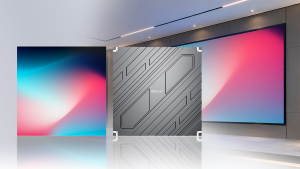 SG Steady GlowIndoor Fixed LEDP1.25 – P4
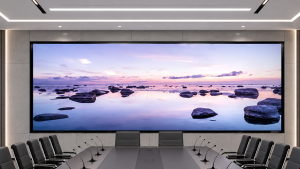 PL Pure LightIndoor Fixed LEDP1.25 – P1.86COB Fine Pitch LED→
 OG Obsidian GlowCOB Fine Pitch LEDP0.7 – P1.86View all product series →Not sure which series fits your project? Get a Recommendation →